
The End of Task Work: Why AI Will Do the Jobs People Used to Do
Written By: Shane Clark on November 9, 2025
The end of task work is already here, even if most people have not noticed it yet. AI is taking over the jobs that are built on repetition, instructions, and predictable steps, and it is doing them faster, cheaper, and without hiring a single human being. The shift is not about robots replacing people in factories. It is about software replacing the kind of work that used to belong to assistants, offshore workers, entry level employees, and anyone paid to “do the steps” instead of design the process. The future belongs to the people who know how to direct the work, not the people who perform it.
Why Instruction Design Is the Human Skill of the Future
Most people learned how to do tasks, not define them. However, the modern workplace is shifting fast. Now that AI can handle almost any repeatable process, the value no longer lives in doing the steps. Instead, it moves to the person who designs the steps. That skill is called instruction design, and it is already becoming more important than traditional labor. According to research from Harvard Business Review, the future of work is shifting from doing tasks to defining them: https://hbr.org/2022/03/the-future-of-work-is-tasks-not-jobs
Instruction design means turning a task into clear, logical actions that a machine can follow. For example, there is a big difference between saying “write me a blog post” and giving a structured set of steps like “research the topic, extract the best sources, outline the post in five sections, and format it for SEO.” One is a request. The other is a defined process. As a result, the person who creates the process becomes more valuable than the person who performs it.
AI does not replace people who create instructions. Instead, it replaces the people who wait for instructions.
Because of this shift, the people who win in the new workplace are the ones who can:
- Break a task into repeatable steps
- Turn messy work into a clean workflow
- Translate intent into machine friendly logic
- Build a process once and let software run it forever
In the past, companies rewarded the person who did the work. Now, the future rewards the person who explains how the work should be done. Therefore, the ability to design instructions becomes a career advantage, while task work becomes automated and eventually disposable.
How AI Powered Browsers Speed Up the End of Task Work
The end of task work is becoming visible first inside the browser. Instead of hiring someone to click through websites, copy information, or repeat the same steps every day, AI powered browsers now handle those actions automatically. They follow the instructions once, and then repeat the workflow as many times as needed.
Unlike a human, the browser never slows down, forgets a step, or waits for a reminder. Instead, it runs the process with the same speed and accuracy every time. For example, it can search Google, collect results, log into accounts, extract data, and move that data into a spreadsheet or CRM without any manual input.
In the past, companies handed this work to offshore assistants or junior employees. Now the same tasks run inside an automated browser that performs the job without supervision. As a result, the human moves up a level. The clicking, copying, and pasting move down into software.
This is how the end of task work begins. First the task becomes a workflow. Then the workflow becomes a script. Finally, the script replaces the worker entirely.
The people who benefit from this shift are not the ones doing the task. They are the ones who know how to describe the task so AI can run it.
Before You Automate, Map the Process First
The end of task work does not start with AI. It starts with clarity. Before any task can be automated, it has to be mapped. If the process is confusing for a human, it will fail instantly when handed to software. However, when the steps are clear, the handoff to AI becomes simple.
A mapped process answers questions like:
- What is the goal?
- What is the first step, second step, and final step?
- What tools or logins are needed?
- What counts as a finished output?
- What happens if something goes wrong?
Once the steps are defined, the work becomes repeatable. As a result, the task can be performed by software instead of a person. That is how a workflow turns into automation.
Most people think the automation comes first, but the process comes first every time. AI can only follow what you explain. If there are no instructions, the AI has nothing to act on. When the instructions are unclear, the process fails. But when the steps are clear, the task stops being a job and becomes a system.
This is why instruction design and process mapping are now career skills, not technical extras. The person who maps the work becomes more valuable than the person who performs it.
For Repeatable Tasks, the AI Agent Will Replace the Browser
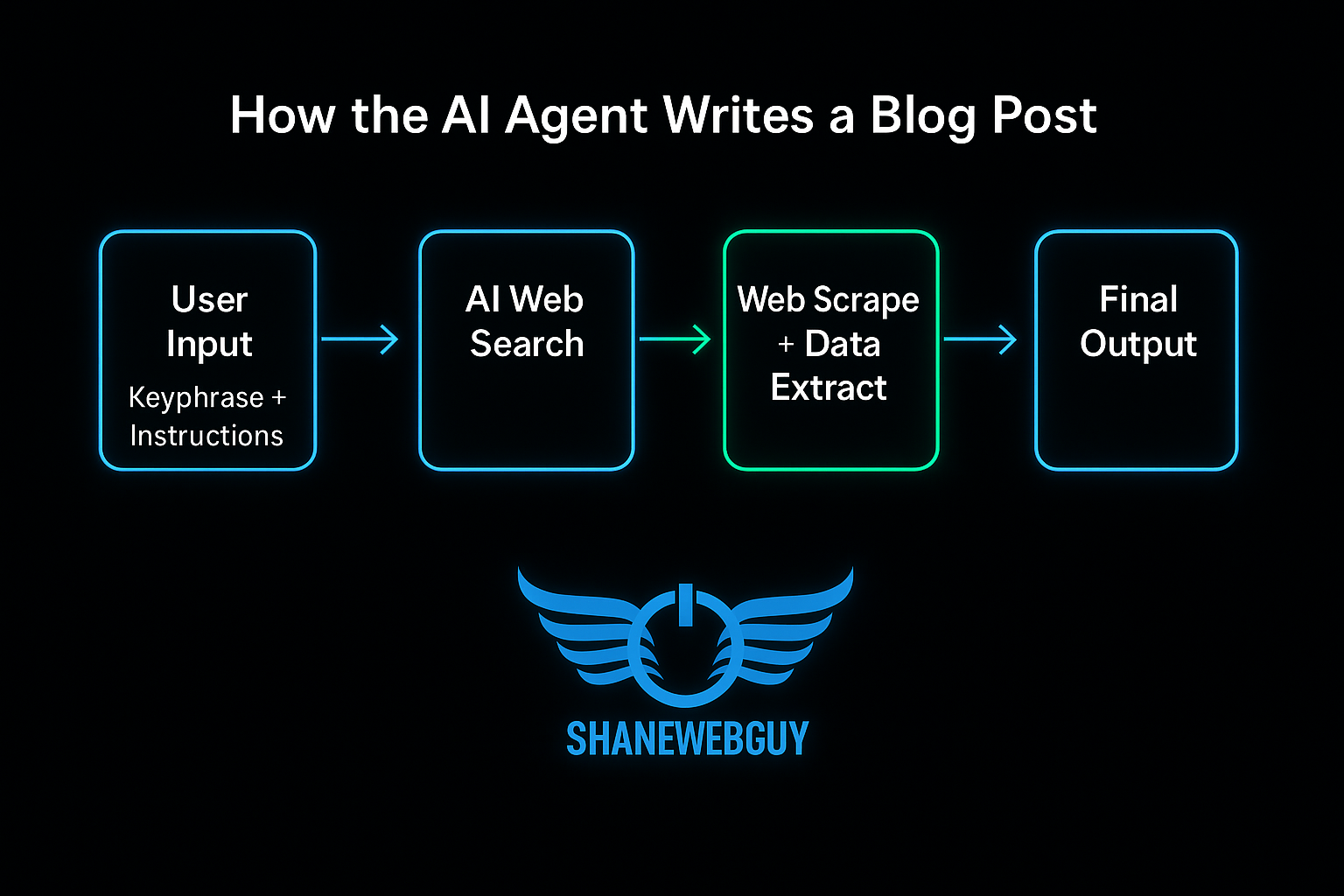
AI powered browsers are a useful first step, but they are not the final stage of automation. Once a task becomes fully repeatable, it no longer needs a browser at all. Instead, it turns into an AI agent, which runs the same workflow in the background without screens, clicks, or website loading.
A browser still behaves like a human user. An agent skips the interface and goes straight to the result. For example, a browser can log into a site and copy data, but an agent can pull the same data through an API automatically. A browser can paste content into a form, but an agent can publish that content directly from a database with no visual steps required.
As the task repeats more often, the browser becomes unnecessary. Eventually, the workflow becomes a silent service that runs every hour, every day, or whenever a trigger happens. At that point, there is no “work” left to assign. The task no longer belongs to a worker. It belongs to the system.
This is the real difference between simple automation and the end of task work. The browser still simulates effort. The agent eliminates it.
The Human Role After the End of Task Work
As more tasks move from people to software, the role of the human does not disappear. It changes. Instead of clicking, typing, and repeating steps, the human becomes the one who defines the goal, writes the instructions, checks the output, and improves the system over time. In other words, the work shifts from doing the task to directing the task.
AI can run the workflow, but it cannot decide why the workflow matters. It cannot choose the business outcome, judge the quality of the result, or fix the process when the goal changes. That is still human territory.
However, the type of human who stays in the workflow changes too. The person who waits for instructions loses value. The person who creates the instructions gains value.
The new human role centers on four skills:
- Setting the objective
- Defining the steps
- Reviewing the result
- Improving the process
This is why the rise of AI agents does not eliminate humans. It simply removes the humans who only perform tasks. The ones who define, design, and refine the work will stay.
The future is not human versus AI. It is humans who direct AI versus humans who get replaced by it.
How the End of Task Work Will Reshape Jobs and Teams
When the end of task work becomes normal, companies no longer need large groups of people to repeat the same actions every day. Instead, they need far fewer people, but with very different responsibilities. The people who stay are the ones who design the workflow, not the ones who follow it.
AI removes the need for task based roles first. As a result, teams shrink, but the remaining roles gain more responsibility. One person with AI agents can replace what used to take five or ten people doing manual work. This does not happen because the human suddenly becomes faster. It happens because the work is no longer done by humans at all.
This shift changes how teams are built:
- Fewer assistants, more operators
- Fewer doers, more process owners
- Fewer task workers, more decision makers
- Fewer people managing people, more people managing systems
The old structure was built around labor. The new structure is built around logic. Before, businesses hired people to complete steps. Now they hire people to define steps, automate them, and improve them over time.
The teams that adapt will run leaner, move faster, and produce more output with fewer salaries. The teams that do not adapt will keep hiring task workers until the day AI makes them unprofitable.
The future workplace is not human heavy. It is system heavy and human directed.
The Reality for Offshore Workers and Task Based Roles
The end of task work does not stop at offices or corporate teams. It hits offshore workers first. For years, companies sent repetitive work to cheaper labor markets, but AI now performs the same work with a one time setup and no salary. As a result, the financial reason for outsourcing begins to fade.
Virtual assistants, data entry workers, form fillers, list builders, content rewriters, appointment setters, and basic support staff all feel the same pressure. The issue is no longer location. The issue is the type of work. If a task can be explained step by step, AI can repeat it forever.
In the past, someone in another country handled the task for less money. Now software runs the entire process, scales on demand, and never asks for time off or a raise. The work did not move to a different country. It moved out of human hands completely.
However, this shift does not remove every offshore worker. It removes the ones who only follow instructions. The workers who learn how to build workflows, manage automations, or review AI output still have value, because they no longer compete on price. They compete on skill.
The future does not reward cheap labor. It rewards instruction labor. The value moves from hands to head, and the work moves from people to process.
Get Ahead by Learning How to Give Better Instructions
The end of task work does not remove opportunity. It simply moves it. The people who learn how to give clear instructions will replace the people who wait for instructions. In the past, skill meant knowing how to do the task. Now skill means knowing how to define it so a machine can repeat it.
Anyone can click buttons. Very few people can explain why the buttons matter and what the outcome should look like. That gap is where the new value lives.
To stay useful in an AI driven workplace, you need three abilities:
- Explain a result in clear language
- Break a task into steps a machine can follow
- Review the output and improve the workflow
Those who only perform the steps will compete with software. Those who design the steps will manage the software.
Instead of asking, “How do I keep my job?” the better question becomes, “How do I make myself the one who writes the instructions?” The workers who learn how to do that will stay in control of the work, even when the work is no longer done by humans.
The future does not remove humans. It removes task workers. The people who stay are the ones who think, define, and direct.
Why the End of Task Work Matters for Your Business
The end of task work is not just a trend. It is a turning point for every business that still relies on people to perform repetitive steps. The companies that adapt will run faster, spend less, and outgrow the ones still paying for manual effort. The shift is simple: the work moves from human hands to automated systems, and the advantage goes to the business that makes the transition first.
If your team is still copying data, filling forms, moving info between tools, or doing anything that can be explained step by step, then you are already behind the curve. AI can run that workload, and it never calls in sick, forgets a step, or waits for a login reset.
That is where ShaneWebGuy comes in.
Instead of hiring more task workers, we help you replace task work entirely. We design the process, automate the steps, and turn your workflow into a system that runs itself. You keep control, you reduce costs, and you scale output without growing payroll.
Ready to replace task work with automation?
✅ Book a call with ShaneWebGuy
✅ Get a workflow audit and automation plan
✅ Stop paying people to click buttons
📞 Call or text: +1 408-915-5077
🌐 ShaneWebGuy.com

Why is task based work disappearing?
Because AI can repeat instructions faster, cheaper, and without hiring, training, or managing employees.
Which jobs will be affected first by the end of task work?
Virtual assistants, data entry workers, form fillers, list builders, customer support agents, and anyone paid to repeat the same steps.
Does the end of task work mean all jobs will be replaced by AI?
No. Only roles based on execution will disappear. Roles based on thinking, directing, and improving workflows will stay.
How can someone stay valuable when task work goes away?
By learning how to design instructions, map processes, manage AI output, and improve automated workflows.
How are AI powered browsers part of the end of task work?
They act like digital hands, completing web based actions automatically instead of hiring a person to do them.
What is the difference between a task worker and an instruction worker?
A task worker follows steps. An instruction worker defines the steps so AI can perform the task instead.
Will the end of task work affect offshore and remote workers first?
Yes, because companies used them for low cost task work, and AI now performs that same work with no salary.
Is AI replacing workers or replacing the work?
It replaces the work. Once the work is automated, the job attached to that work is no longer needed.
What skills replace task based labor in the future?
Process mapping, workflow design, prompt writing, automation setup, and AI output review.
How does the end of task work change business teams?
Teams get smaller, but roles become more strategic. One person working with AI replaces many people doing manual steps.
What is the biggest advantage of adopting AI before task work ends?
You control the systems instead of being replaced by them. Early adopters become workflow owners, not job seekers.
