
Mailchimp vs Constant Contact
Written By: ShaneWebGuy on June 29, 2020
Email marketing is the first commercially-viable way to reach more people online, and it will probably be the last to go, too. Ninety-three percent of B2B marketers are still using it regularly. Eighty percent of professionals from different industries still believe that email marketing is vital to increasing customer retention. Moreover, about 59% of digital marketers see email marketing as one of their most significant ROI sources.
Mailchimp vs. Constant Contact: Overview
Mailchimp Overview
Mailchimp offers email marketing services and marketing automation tools for digital marketing. Mailchimp has been online since 2001 and is considered to be the leader in email marketing and automation platform.
It is estimated that Mailchimp has a 60.51% market share of the email marketing industry, with an estimated 12 million customers. Moreover, the platform delivered over 340 billion emails in 2019, with a reach of four million.

Constant Contact Overview
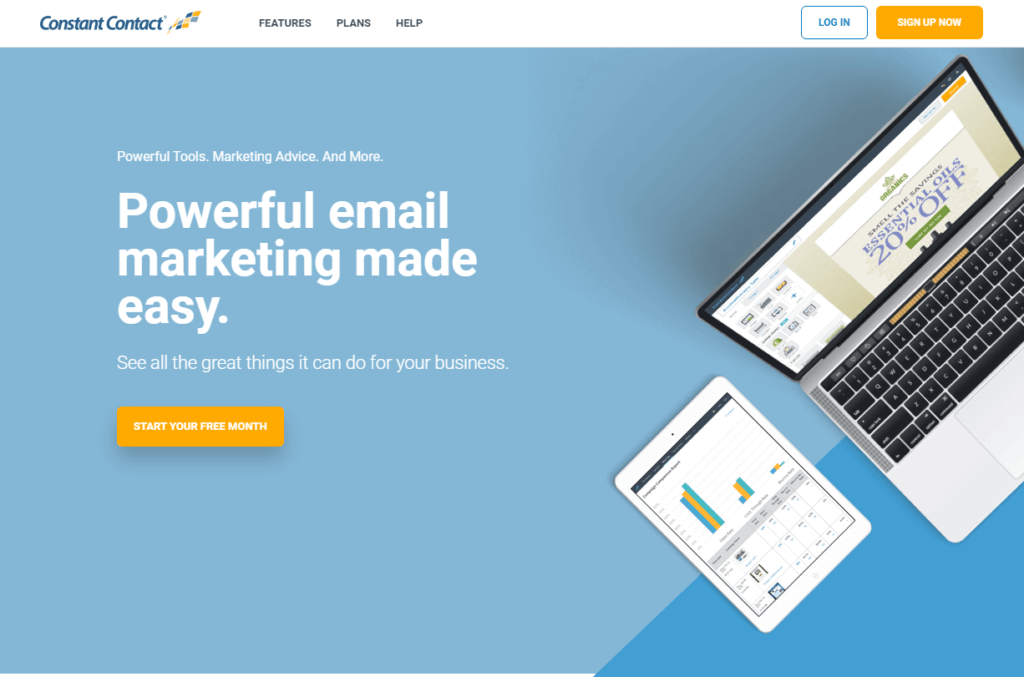
Constant Contact is another email marketing and automation service designed for a wide range of customers, from SMBs to larger companies. Customers can choose to sign up for a free one-month trial before upgrading to a monthly plan.Initially, Constant Contact was more focused on email marketing. However, it is now following the trend of its competitors. Constant Contact has rolled out an array of feature-rich tools for integration, marketing automation, and segmentation.
Mailchimp vs. Constant Contact: Pricing
Mail Chimp Pricing:

Mailchimp offers four tiers: Free, Essentials, Standard, and Premium. The Free plan provides seven marketing channels, one-click automation tools, basic templates, and marketing CRM.
Essentials ($9.99/month), which is the “basic” tier for paid customers, provides all free features, split-testing, all email templates, and 24/7 customer care. The Standard plan ($14.99/month) gives you access to advanced audience insights, retargeting, custom templates, and custom retargeting features.
The Premium plan ($299/month) provides all of the previous tiers’ features plus advanced segmentation, multivariate testing, unlimited seats, and phone support.
Constant Contact Pricing:

In contrast, Constant Contact provides just two plans: Email and Email Plus. The Email plan starts at $20/month (the price changes depending on the number of contacts). The first month is free.
The Email plan includes: being able to send unlimited emails, customizable emails, a mobile-responsive website, contact list important, and other essential ecommerce marketing basics.
The highest tier is Email Plus (starting at $45/month). This tier includes all the features of the Email plan plus automated welcome series, automated behavioral series, polls, dynamic content, and more.
The Winner: In terms of value, Mailchimp provides more options for customers. Mailchimp also has a bigger roster of automation tools and features to scale your business.
Mailchimp vs. Constant Contact: Ease of Use and Automation
Mailchimp offers a more sophisticated dashboard and email editor with many features to tweak your emails to perfection. In contrast, Constant Contact took on a more straightforward approach with its editor, so it is much easier to use for beginners. It may take some time before you master how features like subscriber opt-ins work, but you’ll get there.
Also, Mailchimp offers great automation features for sending follow-up emails and providing recommendations to existing customers. Well-designed automation is useful for ecommerce websites.
For one, you can set up Mailchimp to email registered accounts with abandoned carts. Constant Contact doesn’t have the breadth of automation features that Mailchimp offers. However, you can set up auto-responder emails and craft personalized emails for segments.
The Winner: Mailchimp sweeps the competition with advanced automation features and a full-featured email editor with a low learning curve. For ease of use, based on the email editor’s simplicity and accessibility, Constant Contact takes the lead, but only slightly.
Mailchimp vs. Constant Contact: Design, Multimedia, Reporting, and Deliverability
Design
Design features are essential because not everyone can create attractive emails from scratch using manual code. Constant Contact provides more templates for users, but Mailchimp counterbalances this by offering more customization options for their email templates.
Multimedia Storage
Additionally, Mailchimp offers unlimited storage for multimedia elements/files. In contrast, Constant Contact offers just two gigabytes of storage. Mailchimp also has a limited Inbox Preview feature. You get 25 tokens free, and each view will cost you one token. If you are on a free plan with Mailchimp, you can try Litmus, which offers the first seven days for free to all Mailchimp users.
Reporting
In terms of reporting, both Mailchimp and Constant Contact provide automated reports on CTRs, bounce rates, open rates, clicks, forwards, etc. However, Constant Contact does not have a click map, while Mailchimp does. Reporting is an essential feature for email marketing in general because you can’t measure the success of a campaign without proper access to metrics.
Spam Testing and Deliverability
Both Mailchimp and Constant Contact have built-in spam testing tools. Mailchimp uses Omnivore, an abuse-prevention system that checks newly uploaded contacts. If the system detects addresses with a high bounce rate or abuse rate, then Omnivore sends a message to you so you can manually remove the bad addresses.
Bad addresses can be spamtraps from anti-spam organizations and similar online entities that ‘catch’ organizations and individuals sending mail to outdated email addresses. Spamtraps can generate hard bounces and can also cause sending servers to be blocked by mail providers (via complaints).
Constant Contact has an overall deliverability rate of 89.3%, with 78.1% of mails getting into the Primary Inbox, while the rest go to Promotions Inboxes. On the other hand, Mailchimp’s overall deliverability rate is 84.6%, with 75.6% reaching the Primary Inbox, and 26.7% of all emails being grouped for the Promotions Inbox.
The Winner:
Constant Contact only has a slight edge in terms of deliverability rates. However, Mailchimp’s Omnivore spam testing system takes precedence over Constant Contact’s built-in spam testing tool.
For design, Mailchimp’s higher customization capabilities overtake Constant Contact’s higher template count. The two went head to head in reporting capabilities, but Constant Contact lacked the click map, which helps determine the better email layout. Mailchimp wins in all three domains.
Summary:
The quantity and quality of Mailchimp’s features gave it an advantage in all major quality factors for email marketing and automation software. However, Constant Contact is not far from closing the gap in the coming years. It continues to unfurl new features and automation tools to compete with Mailchimp and other similar email marketing brands. Feel free to reach out to me if you need help setting up your email marketing strategy to scale your business this year.
